Versus Wheels: How to Choose the Right Style and Fitment for Your Build
Versus Wheels offers a wide range of designs and sizes for drivers who want to change the look of their car without making fitment unnecessarily complicated. Here’s how models like the VS55, VS09, VS005, and VS103 differ, what wheel size and offset actually change, and how to choose the right setup for your build.
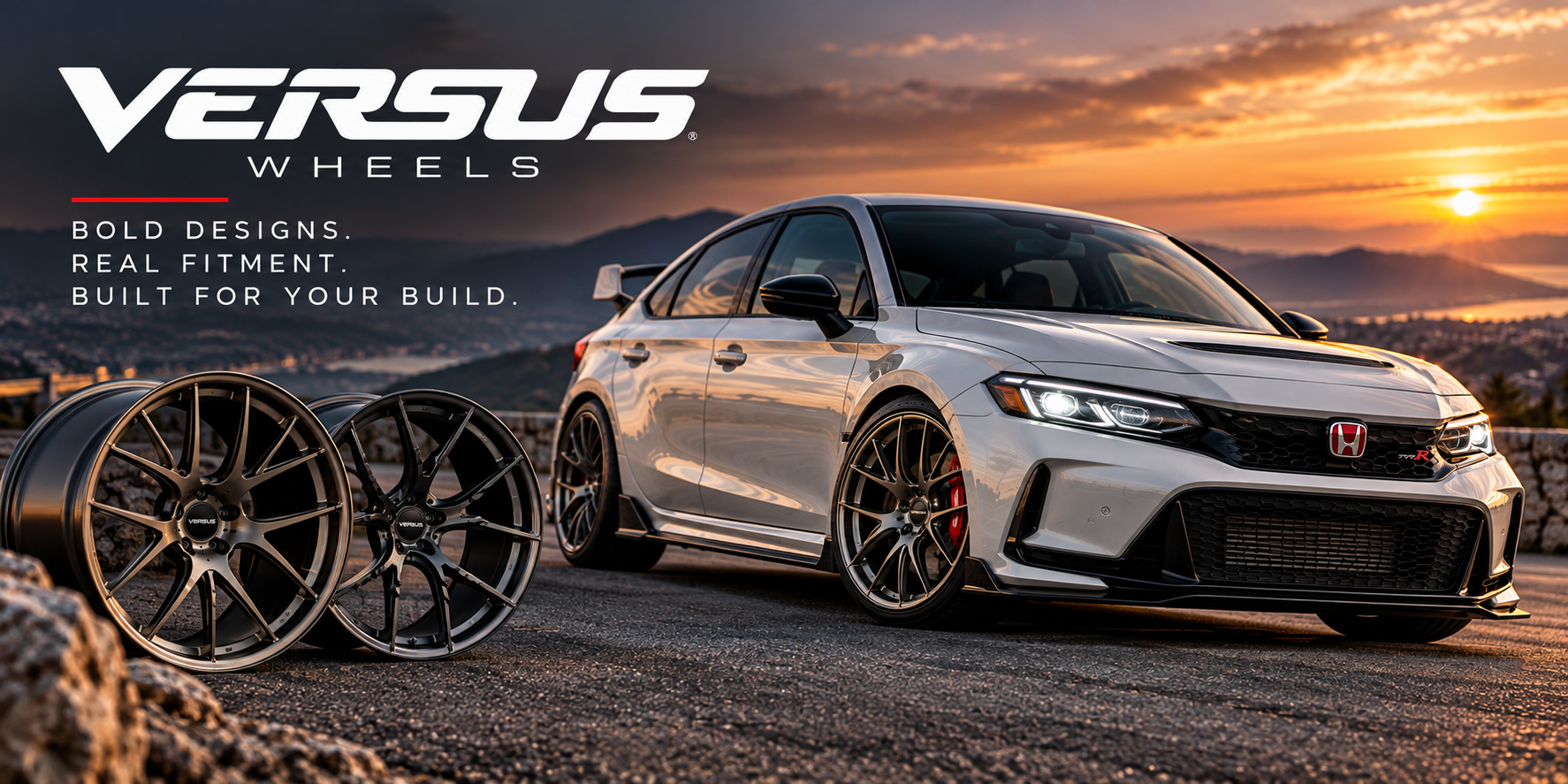
A new set of wheels can change the personality of a car faster than almost any other modification.
The challenge is finding a design that looks right without creating a fitment headache.
That is where Versus Wheels fits into the aftermarket wheel market.
The Versus lineup includes everything from smaller 15- and 16-inch applications to 20-inch street setups, with designs aimed at sedans, coupes, hatchbacks, and other enthusiast vehicles. Models such as the VS55, VS09, VS005, VS22, VS24, VS33, and VS103 give drivers several very different ways to change a vehicle's stance without jumping immediately into an ultra-specialized wheel setup.
If you are still comparing brands and styles, you can start with the full wheel catalog at Elite Wheels and narrow the choices around your vehicle.
What Are Versus Wheels?
Versus Wheels is an aftermarket wheel brand with a lineup built around street-oriented styling and broad fitment options.
The current range includes designs from 15 inches through 20 inches depending on the model, which allows the brand to work across very different types of vehicles.
That matters because not every enthusiast wants the same thing from an aftermarket wheel.
One driver may want a simple 17-inch setup for a compact daily driver. Another may want a wider 18-inch wheel for a lowered performance sedan. Someone else may want a 20-inch wheel that completely changes the presence of a larger coupe or sedan.
Versus gives you multiple design directions without forcing every car into the same visual formula.
Which Versus Wheel Designs Stand Out?
The right wheel design depends heavily on the vehicle wearing it.
A simple five-spoke or split-spoke wheel can look completely different on a compact hatchback than it does on a large performance sedan. Wheel diameter, finish, tire sidewall, ride height, and brake size all influence the final result.
Several Versus models are especially useful examples of how different designs can fit different builds.
Versus VS55
The VS55 is offered in sizes including 17x8.5, 18x8.5, and 20x9.
That range makes it useful for drivers who like one wheel design but want to scale the overall look to match the vehicle.
A 17-inch or 18-inch setup can work well on a performance-oriented street car where tire sidewall and overall weight still matter, while a 20-inch version creates a more dramatic visual presence on vehicles that have enough wheel well and brake clearance to support it.
Versus VS09
The VS09 moves toward larger street-oriented sizing, with the current lineup including 18x8.5 and 20x9 configurations.
That makes it particularly relevant to modern sedans and coupes where an 18- or 20-inch wheel can fill the wheel opening without requiring the extremely wide dimensions associated with more aggressive track or stance builds.
Versus VS005
The VS005 covers a much broader diameter range.
Versus lists the design in 15x7.5, 16x7.5, 17x8, and 18x8.5 sizes.
That is valuable for smaller enthusiast platforms because bigger is not always better.
On a lightweight compact or older performance car, a 15-, 16-, or 17-inch wheel can preserve tire sidewall, help maintain sensible overall tire diameter, and avoid adding unnecessary wheel size simply for appearance.
Versus VS103
The VS103 is another versatile option, with applications listed in 17x8, 18x8.5, and 20x8.5.
It is also offered across several bolt patterns depending on size, including applications for common 5x112, 5x114.3, and 5x120 vehicles.
This is a good example of why choosing a wheel model is only the beginning. The exact specification still has to match the car.
How Do You Choose the Right Wheel Diameter?
Wheel diameter has a huge effect on the finished look of a vehicle, but it also changes the tire package.
Moving from a 17-inch wheel to an 18-, 19-, or 20-inch wheel usually means reducing tire sidewall if you want to keep the overall tire diameter close to stock.
Smaller Wheels
A smaller wheel often allows a taller tire sidewall.
That can provide:
- More cushioning over rough roads
- Additional protection against pothole impacts
- More tire flexibility
- A more performance-oriented appearance on certain compact cars
Smaller wheels can also be useful on vehicles where reducing unnecessary wheel size is more important than filling every inch of the wheel opening.
Larger Wheels
Larger wheels can create a more aggressive or modern look and may provide additional brake clearance depending on the wheel design.
However, moving up in diameter can also mean:
- Less tire sidewall
- A firmer ride
- Greater vulnerability to pothole damage
- Potentially more wheel and tire weight
- Higher replacement tire cost
The goal should be choosing a diameter that fits the vehicle and your priorities rather than automatically selecting the largest wheel available.
Why Does Wheel Width Matter?
Wheel width determines which tire sizes the wheel can properly support and how much physical space the wheel occupies inside the fender.
This becomes especially important when moving from a factory wheel to an 8-, 8.5-, or 9-inch aftermarket wheel.
Wider Is Not Automatically Better
A wider wheel may allow a wider tire, but only if the vehicle has enough clearance.
The inside of the tire needs room around suspension components, while the outside needs room around the fender and bodywork.
Increasing width without considering those clearances can create rubbing even when the wheel diameter looks correct.
Match the Tire to the Wheel
The tire manufacturer specifies an approved wheel-width range for each tire size.
A tire should not be stretched onto a wheel that is too wide or pinched onto a wheel that is too narrow simply to achieve a certain appearance.
Planning the wheel and tire together produces a much better result.
What Does Offset Change?
Offset is one of the most misunderstood measurements in wheel fitment.
It describes where the wheel's mounting surface sits relative to the centerline of the wheel.
That measurement helps determine where the entire wheel sits inside the wheel well.
Offset Is Vehicle-Specific
A +35mm offset does not automatically mean a wheel will be flush, tucked, or aggressive.
The same +35mm wheel can sit very differently on two different vehicles.
Wheel width changes the equation too.
An 18x8.5 +35 wheel and a 20x9 +35 wheel do not place their inner and outer edges in exactly the same location.
This is why fitment should always be evaluated using the complete wheel specification and the specific vehicle.
Too Far Inward
A wheel sitting too far inward can create clearance problems with:
- Struts
- Control arms
- Brake components
- Inner fender liners
Too Far Outward
Moving the wheel too far outward can create problems with:
- Fender clearance
- Tire rubbing
- Suspension compression
- Steering clearance
The best fitment is the one that gives you the stance you want while maintaining the clearance the vehicle needs.
Why Does Bolt Pattern Matter?
The bolt pattern determines whether the wheel can physically mount to the vehicle's hub.
Versus offers different models across several common bolt patterns.
For example, current VS103 configurations include applications for 5x112, 5x114.3, and 5x120 depending on wheel size, while the VS005 lineup includes fitments for vehicles using patterns such as 4x100, 5x100, and 5x114.3.
Do Not Shop by Diameter Alone
Two wheels can both be 18x8.5 and still be completely incompatible.
The bolt pattern, offset, center bore, brake clearance, and load requirements may all be different.
That is why searching only for "18-inch wheels" is never enough to guarantee fitment.
Use the vehicle information and complete wheel specifications together.
What About Center Bore?
The center bore is the opening in the center of the wheel that fits over the vehicle hub.
Several Versus applications use a 73.1mm center bore, which allows the same basic wheel design to work across multiple vehicle platforms when the rest of the specifications are compatible.
Hub-Centric Rings May Be Required
If the wheel's center bore is larger than the vehicle hub, the installation may use a hub-centric ring to fill the difference.
The ring helps center the wheel on the hub during installation.
This is normal with many aftermarket wheels and does not mean the wheel is incorrectly designed.
The important part is using the correct hardware for the vehicle and wheel combination.
How Should Versus Wheels Fit a Daily Driver?
Daily-driven vehicles need a different setup than cars built primarily for shows or track events.
A daily driver has to handle potholes, parking garages, passengers, highway miles, rain, road debris, and normal tire wear.
Keep the Fitment Practical
A slightly more aggressive stance can completely transform the car without pushing the wheel to the edge of the fender.
For most street builds, enough clearance for suspension movement and steering is more useful than achieving the most aggressive possible fitment.
Think About Tire Availability
Before buying the wheels, check the tires available in the size you plan to run.
A wheel size that looks great on paper may become inconvenient if only a few expensive tire options are available.
A common wheel and tire size gives you more flexibility when replacement time comes.
Do Not Ignore Ride Quality
Going from a factory 17-inch setup to a 20-inch wheel may radically change the appearance of the car, but the reduced tire sidewall may also change how the car feels over broken pavement.
If the vehicle is driven every day, that compromise should be considered before ordering.
What About Lowered Cars?
Suspension modifications make wheel fitment more complicated.
Lowering the vehicle changes the position of the body relative to the wheel and tire, and may also change alignment.
Lowering Reduces Available Clearance
A wheel and tire combination that fits perfectly at factory ride height may rub once the vehicle is lowered.
The tire may contact the fender during compression or steering even though it clears while the vehicle is sitting still.
Camber Changes Fitment Too
Changing camber alters the angle of the wheel and tire.
That can create additional outer clearance at the top of the tire, but excessive camber should never be used simply to force an inappropriate wheel setup onto the car.
Alignment should support the way the vehicle is driven.
Coilovers and Air Suspension Add Variables
Cars with adjustable suspension can have dramatically different clearance depending on ride height.
Always evaluate wheel and tire clearance throughout the suspension's usable range.
Which Versus Wheel Size Makes Sense for Your Build?
There is no universal answer, but a few general approaches can help narrow the choice.
Compact Street Car
A 15-, 16-, or 17-inch option such as configurations offered in the VS005 lineup may make sense where maintaining tire sidewall and a lighter visual proportion are priorities.
Modern Performance Sedan
An 18x8 or 18x8.5 setup is a common middle ground for many modern cars.
It can provide enough diameter for larger brakes and modern styling without automatically moving into a very low-profile tire.
Larger Sedan or Coupe
Some vehicles have enough body size and brake clearance to visually support a 20-inch wheel.
Models such as the VS55, VS09, VS33, VS44, VS11, VS24, and VS103 are offered in 20-inch configurations depending on the exact wheel.
The vehicle should determine whether that size is appropriate.
What Should You Check Before Ordering Versus Wheels?
Before ordering any aftermarket wheel, confirm the entire fitment.
Check:
- Vehicle year, make, model, and trim
- Wheel diameter
- Wheel width
- Bolt pattern
- Offset
- Center bore
- Brake clearance
- Suspension clearance
- Fender clearance
- Load requirements
- Desired tire size
- Factory or modified suspension
Test-Fit Before Mounting Tires
Whenever fitment is uncertain, test-fitting the wheel before mounting a tire can prevent an expensive mistake.
Once a tire has been mounted, return options may be significantly different.
The wheel should clear the brakes, suspension, hub, and body before the complete set is assembled.
Ask Before Guessing
If your vehicle has coilovers, oversized brakes, spacers, body modifications, or an unusual tire setup, fitment becomes less predictable.
You can contact Elite Wheels for fitment help before ordering rather than trying to solve an expensive clearance problem afterward.
How Should You Care for Versus Wheels?
Wheel finish can last much longer when it is cleaned correctly.
Versus recommends using mild soap and water with a soft, non-abrasive cloth instead of harsh chemical cleaners.
Let the Wheels Cool First
Do not spray cleaning products or cold water onto wheels immediately after aggressive driving or heavy braking.
Allow the wheels and brakes to cool before cleaning them.
Avoid Harsh Wheel Cleaners
Strong chemicals can damage painted, powder-coated, polished, or clear-coated finishes.
A simple cleaning routine performed regularly is usually safer than allowing brake dust and road grime to build up and then trying to remove it with aggressive chemicals.
Protect the Finish
Depending on the specific finish, a compatible wheel wax or ceramic coating can make brake dust easier to remove and reduce how much contamination sticks to the surface.
Always make sure the product is appropriate for the wheel finish before applying it.
Who Should Consider Versus Wheels?
Versus makes the most sense for drivers who want to noticeably change the appearance of their car while still having multiple practical sizing options to choose from.
The lineup is worth considering if you want:
- A broad selection of street-oriented wheel designs
- 15- through 20-inch sizing depending on model
- Common enthusiast bolt-pattern applications
- Options for compact cars, sedans, coupes, and hatchbacks
- A wheel setup that can work with stock or modified suspension when properly fitted
- Different style choices without locking your build into one wheel design
If you want to compare Versus against other aftermarket options before making the decision, the Elite Wheels brand directory makes it easier to explore different manufacturers without relying on blocked search URLs.
Choose the Wheel Around the Car
A good wheel should look like it belongs on the vehicle.
That means more than choosing a design you like.
Diameter, width, offset, bolt pattern, center bore, tire size, brake clearance, suspension, and ride height all contribute to the final result.
Versus offers enough variety that you can approach the build from several directions: a smaller wheel with more tire sidewall, an 18-inch street-performance setup, or a larger 20-inch configuration designed around visual presence.
The right answer depends on the car.
Start with the vehicle, decide what you want the finished stance to look like, and then choose the wheel specification that gets you there without sacrificing the clearance and drivability you actually need.
Ready to start comparing options? Browse aftermarket wheels at Elite Wheels and build the setup around your vehicle.